
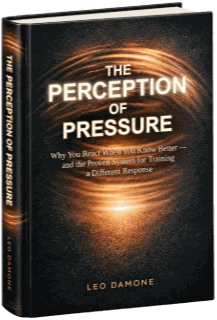
You knewwhat to do.You didn'tdo it.
That's not weakness. That's pressure.
Under pressure, your body narrows what you can see. The better answer was there. It was outside your vision.
15 questions. About 5 minutes. Free. No email needed to see your result.
What fell outside your vision under pressure.
One text at the end of a long day. Watch your field of vision narrow to the phone. Everything you needed is still on the desk. You just can't see it.


What you couldn't see
Pickup at 6:30. The option to answer tomorrow. What Dana actually meant.
You didn't make the wrong choice. You made the only one you could still see.
It was never just the text.
Watch the day that came before it. Nothing big happens. That's the point. Tap through it and see what each part of the day takes.

6:10 PM. One more thing.
Pick the last drop:
“Can you help me with my homework?”
Your reaction
NOT NOW!
- 5:48 PMTraffic
Twenty-two minutes without moving. You're already replaying tomorrow.
−25% access - 3:05 PMThe "quick call"
It ran forty minutes. Someone else's fire, now on your desk.
−20% access - 12:30 PMHalf a lunch at your desk
Eaten between calls. No break. No reset.
−20% access - 9:12 AM47 unread. 15 marked urgent.
You haven't finished your first cup of coffee, and the day already has a list for you.
−15% access - 7:55 AMRunning late
Every red light feels personal. You walk in already rushing.
−5% access - 6:40 AMFive hours of restless sleep
The alarm goes off and you're already behind. Groggy before your feet hit the floor.
−10% access
It was full before the moment started.
Every small moment fills your cup and drains your access at the same time. The room left in your cup is your access.
The question wasn't the problem. The cup was already full.
That's a dirty container. Without a reset, it becomes your pattern. And the pattern sends you a bill you may not realize you're paying.
Survival Mode has been billing you for years.
It doesn't come as one big charge. It comes in small ones, every day, until your body pays the bill you've been running up.
- Your marriageYour last dropThe same argument, a different month. Halfway through, you stop hearing words. You're just waiting to talk.ChargedCloseness
- Your kidsYour last dropThey stopped bringing you small things, because small things got big reactions.ChargedTheir openness
- Your eveningsYour last dropYou were home by six. You weren't really there until nine.ChargedPresence
- Your workYour last dropYou knew the answer an hour later, in the shower.ChargedCredibility
- Your careerYour last dropThe promotion went to someone who stayed steady in the room.ChargedOpportunity
- Your teamYour last dropPeople started managing your reactions instead of telling you the truth.ChargedHonesty
- Your sleepYour last drop3:12 AM, replaying what you should have said.ChargedRest
- Your bodyYour last dropSunday night, your stomach already knows it's Monday. Your jaw has been tight so long it feels normal.ChargedHealth
- Your mindYour last dropYou carried a two-minute conversation for two days.ChargedMental space
- YourselfYour last dropYou started believing this is just who you are.ChargedSelf-trust
Add up one line yourself.
How many nights a week do you replay a difficult conversation or “bad” moment?
For how long?
About 2 full work weeks, spent replaying.
The Scorecard takes 5 minutes.
Know someone who's paying this bill?
None of this means something is wrong with you. Survival Mode kept you safe in dangerous moments in your life. It was never meant to run your whole life.
You're already paying. The only question is whether you keep paying without knowing where it starts.
Trusted by





Not theory. Real lives. Real impact.
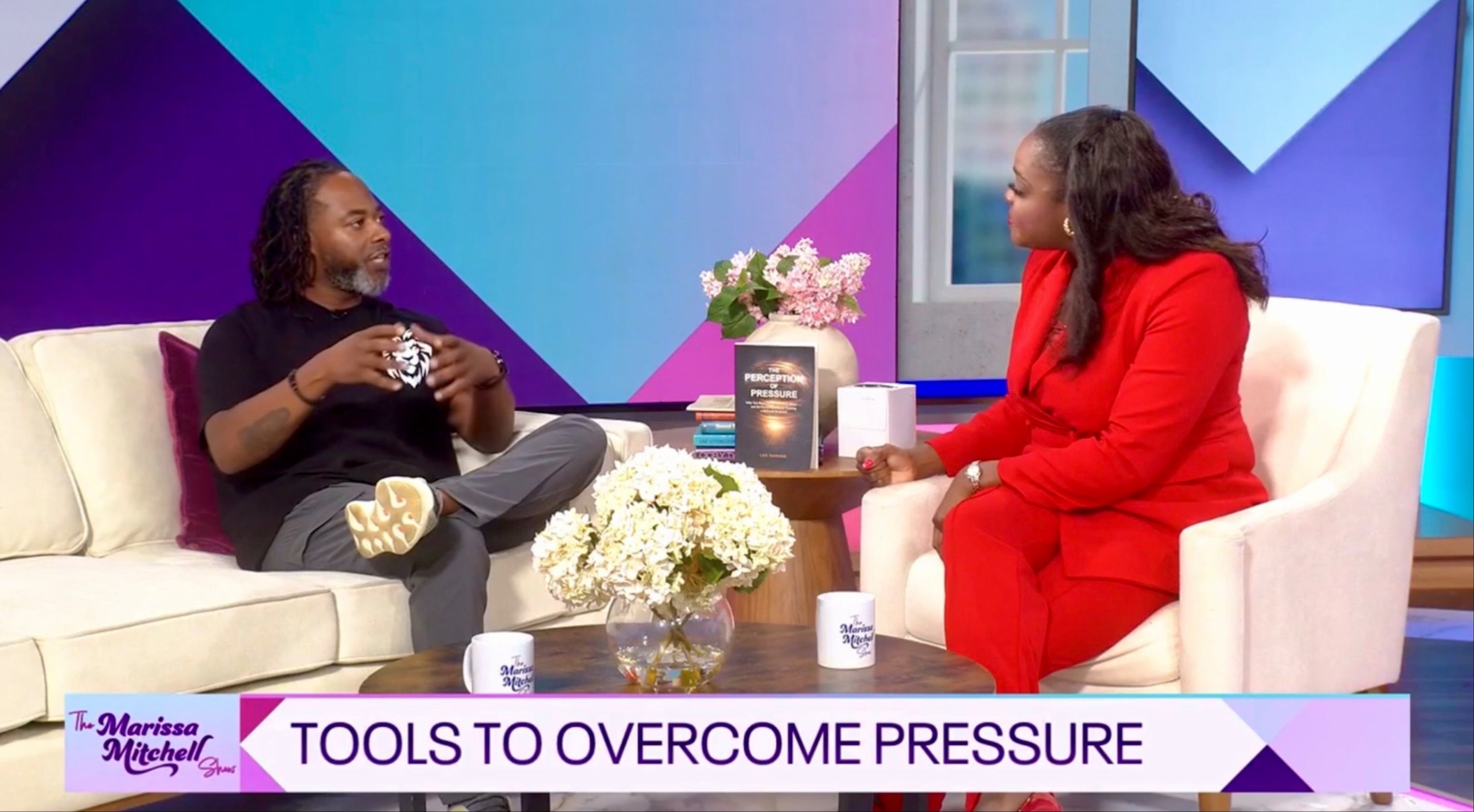 Watch
Watch- Published
Author of The Perception of Pressure. 354 pages built on one question: why do we fail to do what we know when pressure hits?
- Proven in the field
Fourteen years designing stability systems for Fortune 500 companies running at peak demand, Amazon, Tesla, and CarMax being a few.
- Measured
The Scorecard: 15 questions, 5 constructs, 4 access bands. In partnership with the VCU Evaluation Laboratory.
When people can name the pattern, they start seeing it differently.
“This framework gave me the language I needed to understand what was happening in my life when pressure rose. I can honestly say it saved my marriage, the relationship with my children and helped me elevate my career.”
Before the book, Leo spent years and thousands of hours teaching clients to stay regulated in high-pressure situations.
- Google review
“This was by far the most informative and practical training I have been part of. Leo is professional, a subject matter expert, and works with the trainees at their pace.”
D. Will
- Google review
“I have over 13 years of military service and I have to say his training is the best I have ever seen.”
C. Maiden
- Google review
“Leo was extremely informative and talked about real-life scenarios that we need to be aware of.”
B. Lockhart
- Google review
“It was clear that Leo has a deep passion for his work, and that was evident throughout the training as demonstrated by his accommodating personality, remarkable patience, professional knowledge, and keen ability to communicate with clarity and a genuine sense of purpose.”
D. Abbou
You've experienced this before.
You recognized the pattern. You just didn't have language for it.
Which one is you?
Overthinking
You had enough information. You still couldn't choose.
What just happened
You had what you needed to answer. Your body read the question as a test you could fail, so every draft became a way to avoid failing it.
It wasn't a decision problem. It was a pressure problem.
Anxiety
The pressure stayed active long after the moment should have passed.
What just happened
The message came at 4:30. Your body never got the signal that it was over, so it kept you on watch all night for something that wasn't in the room.
The moment ended. The activation didn't.
Shutdown
You knew what you wanted to say. The words weren't available when you needed them.
What just happened
You knew exactly what you needed. Under pressure, the words that would have protected you went quiet first, and the word that ended the tension fastest came out instead.
You solved the pressure. Not the problem.
Overreaction
The response made sense in the moment. Afterward it looked completely different.
What just happened
In the moment it felt justified. Two minutes later, with your access back, you could finally see what you had said.
What felt like hindsight was your access coming back.
Next time
Jan 6: Next time I'll wait before I answer.
Mar 19: Next time I'll wait before I answer.
Jun 2: Next time I'll wait before I answer.
Sep 28: Next time I'll wait before I answer.
Oct 4: Next time I'll wait before I answer.
Repeating patterns
You promised yourself you'd respond differently. Then the moment came again.
What just happened
Every one of those promises was sincere. But promises live in what you know, and your response lives in what you have practiced.
You don't access what you know. You access what you've practiced.
Run it back.
Every reaction is a sequence. Slow it down and you can see where it starts.
- 1Event"Can you have the proposal by Friday?"
- 2DemandFriday means this weekend.
- 3Perception"If I push back, they'll think I can't handle it."
- 4ActivationYour chest tightens. Your jaw sets. Your breath moves up into your chest.
- 5Cognitive AccessThe options you'd see on a good day go dark: ask for Monday, ask what can move.
- 6Response"Fine."
- 7OutcomeA weekend gone. A resentment you never say out loud.
- 8ConditioningNext Friday, it happens faster.
You've been trying to fix the last frame. It started in the third.
Promises don't change patterns. Practice does.
Find out where it starts for you.
The Perception of Pressure Scorecard measures the five things that shape what you can access under pressure: how fast you read a moment as a threat, how capable you feel, how much control you sense, how much uncertainty you can hold, and how big the consequences feel.
Your result places you in one of four bands.
- Access Closes EarlyPressure closes the field before perception widens
- Access NarrowsPressure tightens the field before you respond
- Access Holds SelectivelySteady in some domains, narrowing in others
- Access HoldsYour perception stays wide when pressure rises
15 questions. About 5 minutes. Free. No email needed to see your result.
Your path forward.
Each step opens your access a little wider.
- 1
Measure
The Scorecard
See what happens to your access under pressure.
- 2
Understand
Your Starter Guide
Arrives with your result. Your band explained, plus a 5-day training.
- 3
Train
The 15-Day Challenge
Notice. Stabilize. Choose. One short rep a day.
- 4
Practice together
The Community
Free to join. Go deeper as a Member when you're ready.
Your Starter Guide is offered with your result. The Challenge follows from there.
Before you start.
Is the Scorecard really free?
Yes. It's 15 questions and takes about 5 minutes. You see your result as soon as you finish, and you don't need to give your email to see it.
What do I get at the end?
Your band, one of four, and what it means. You also see how you score on each of the five things the Scorecard measures. Your Starter Guide is offered free with your result if you want to go further.
What happens to my answers?
Your answers are saved without your name or anything that identifies you, and they are only used as anonymous totals, including in validation work with the VCU Evaluation Laboratory. Who you are is never shared.
Is this therapy or a diagnosis?
No. It's a self-assessment of how you read pressure, not a clinical test or a diagnosis. If you need care, a licensed professional is the right next step.
What is it based on?
Established research on how people read stress and their own ability to handle it. The Scorecard is being validated in partnership with the VCU Evaluation Laboratory.
Who is it for?
Anyone who knows what to do and still doesn't do it when pressure hits. It was built for parents, partners, professionals and leaders.
You already know what pressure has cost you.
Now find out where it starts.
15 questions. About 5 minutes. Free.
You don't rise to pressure.You simply reveal what you can access.
Find out where it starts for you.15 questions. About 5 minutes. Free.
Take the Scorecard